

BOSTON LITERARY MAGAZINE MARCH 2026
Updated: Mar 2

What problem in your life does writing temporarily solve? What to do with all of the crazy, inspiring, philosophical, angry, weird, and romantic things going on in my head. You know how some folks describe their mind like a web browser with 42 tabs open at once, three of them randomly playing music? Yeah, that's me.
What did writing give you that people didn’t? Time to polish my words with care before offering them.
When did you first realize you needed to write, not just wanted to? Might as well, can’t dance. No, seriously, I was a blocked visual artist (still kind of am) who desperately needed to vent during and after my divorce. I turned to poetry late in life, around forty. I had written as a subject matter expert, corporate trainer, and more, worked in marketing, writing ad copy and designing prepress graphics. Frustrated that I could not draw or paint during an extended, very difficult divorce, I turned to scribbling fragments, little more than word sketches. But I love puzzles, and once I discovered the variety of poetic forms and their rules, I was off to the races.
What silence are you trying to interrupt? One of the things poetry can do that no other art can do as well, it can help you to understand something that you already knew but were unaware that you knew. So, maybe the silence of not knowing what you don’t know.
If you stopped writing tomorrow, what would rot first? My sense of calm, my “Dudeness.”
What emotion do you return to again and again, no matter the subject? Love of course. I’m supposed to write what I know, and I’m blessed to know real love, but I’ve known a lot of other kinds. Let me set a bad example. Learn from my mistakes. You know why love is so painful? It’s worth it. Familial love, romantic, erotic, maternal, love lost, love remembered - the well will never run dry.
What lie do you tell yourself so you can keep writing? I don’t care if anybody reads this.
Who were you trying to impress when you first started? My very first venture into sharing poetry was on a writers website now long defunct. But the affirmation I got there, combined with the daily update of writing, kept me cranking every single day for many months. After their encouragement, I submitted my first chapbook, Grief Tattoos.

What fear would writing remove if it worked perfectly? Writing does work perfectly, reading less so. And to be honest, I believe removing fear would be a fatal mistake.
What do you write instead of saying out loud? Edited clarity.
What personal event made your voice sharper—or quieter? My divorce was a major motivator of poetry, "Grief Tattoos” was fairly sharp edged, and tasted bitter. I’ve been a lot happier since then, so my words have mellowed.
When I first learned that one of my poems was going to the moon, I nearly lost my mind with childlike glee. Thanks to NASA and the Lunar Codex project, the coolest thing that ever happened to me became reality. Then, over a couple of years, three more poems made the journey, and I’m still just as excited, like a ten-year-old on pop rocks and ginger ale. This changed one of my projects drastically. I had been fiddling with a compilation project concerning the first tavern on the moon. Once the lunar codex entered my life, it became central to that project, and flavored the story so much that now, as I polish the finished manuscript, it has become a character in the book in its own right.
Which memory do you circle but refuse to land on? Thanks, but I refuse to land on it.
What part of your childhood leaks into your syntax? Oh, so much. I’m kind of a parrot, so I’ve been mimicking accents since I was a kid. Won a talent contest at nine at the Boys Club for doing impressions. Idioms, odd expressions, puns and wordplay were my bread and butter - cliches too, I guess. I’m a sponge, or like Johnny 5, I wanted INPUT. I read encyclopedias for fun, started working at 14, lost my virginity before I had started working, read every book I could get my hands on. Oscar Wilde said, “The true artist is known by what he annexes, and he annexes everything.” Eclectic absorption became my guiding principle. I did a lot of stupid stuff just for the experience.
Who are you still arguing with on the page? The reader.
What loss taught you how to write? My fifth grade English teacher - Sister Gabriella - taught me to write. My inability to sit down and draw or paint taught me to write poetry.
What trauma shows up disguised as metaphor? Name one that does not.
What topic do you avoid because you’d be too honest? Yeah, still not landing on it.
Whose approval still edits your sentences? My Nana. My mom. My wife. My kids. Myself.

What memory do you keep rewriting, hoping it will change? The memories don’t really change, just our perspective over time. That’s why revisiting is cool. The past is a great place to visit, but you can’t live there, the price is too high.
What truth did you learn too late—and now can’t stop explaining? Time is the only currency you have. What are you willing to exchange it for?
What has to be wrong in your life before you write well? I don’t understand the question, truly. Why does something have to be wrong, in order to write well? If what I write isn’t “well,” it’s gonna be edited and polished before anyone else gets to see it, then workshopped and edited again. Whether I am writing about political rage, a tearful goodbye, or a blessed event, it’s my job to write well, or as well as I can write. Even when it’s crap, I can polish. And crap makes for good fertilizer. The best way to have a good idea is to have lots of ideas. That was Pascal, I think.

What mundane ritual secretly controls your output? Is it time to make dinner?
Where do you write when you’re hiding? I don’t know, I’m not really big on hiding.
What excuse do you use when the work scares you? Just needs a bit of editing, that’s all. We’ll work it out in post.
How do you know when a piece is finished—or do you? When it gets published - released out into the wild - it’s out of my control. It’s done.
What part of writing feels like manual labor? I can’t think of one. I’ve done a lot of manual labor, writing ain’t it. Writing is work, and can be hard work, but the only thing manual about it is the discipline to do it even when you don’t want to do it. Unless you are writing manuals, then everything else I said doesn’t matter.
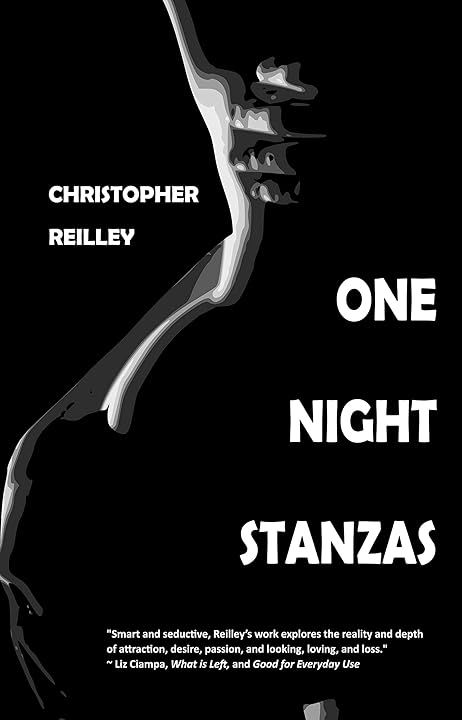
What time of day are you most honest on the page? Only during the time when I’m awake. On the page, I can afford to be brutal, so when I shoot for moderation, the reader gets the point and nobody really gets hurt. Honesty is really the only thing I have to offer here. “Though Love be sweet/ know this of me/ no Love sweet/ without honesty” - from “The Honesty of Love” in One Night Stanzas.
What substance (or absence of one) changes your voice? Politics.
What bad habit do you defend because it “works”? Rum.
What does your writing space say about your self-respect? I respect the fact that as an eclectic, seat-of-the-pants inspirationalist, my clutter of books, pens, notes, hard candies, patches, mementos, puzzles, computer gear, more books, toys, recipes, random cords, reference books, back scratcher, and other assorted nonsense is just my way of keeping inspiration at hand.
Who are you pretending not to be when you write? Someone indifferent. I mean, I have a general “live and let live” policy, and I’m happily indifferent to the many ways my fellow Americans choose to pursue happiness. You do you. But as a poet, as THE Poet, the Narrator, the voice of my words, I am anything but indifferent. All the minutiae are mine to observe. When I write, I try hard not to be indifferent.
What part of yourself only exists on the page? The clear thinking, well-modulated orator. The part of me that’s been proofread.
What voice did you steal before you found your own? That’s a tough one. I’m kind of a sponge, as I mentioned, so I can say with all confidence that I have glommed bits and pieces from lots of smarter folks. But voice, maybe the last poem that smacked me in the face. I try to reproduce the effect, impact, or reason. Take it apart and put it together differently to see if it still works. Then move on to the next voice.
Although, I do think I do a pretty good Shakespeare. Check out "A Lament for Lost Attention" on my blog.
What would your writing lose if you were happy? Why do folks assume poets are all unhappy? I know a lot of the classic ones were, and some of today’s greats, the ones who are as celeb as poets get in this century, are all miserable bastards. So, to answer your question, I guess whatever it is I currently don’t have.
When do you feel like a fraud—and why keep going anyway? Poetically, I feel like a fraud when I am at a reading with capital P Poets. I have been in the presence of a lot of astonishing poetry, words that lit me up. I have to follow that? Seriously? Then I do, and when I return to my seat, the affirmation I get back warms me until the next open mic.

What persona do readers mistake for you? The wise, omniscient bartender/poet/trivia master/advice consultant. The guy that has a grip on the handle, with his ducks in a row. My ducks are not in a row. I don’t even know where some of them are. And I think one of them is a pigeon.
What truth sounds better written than lived? The truth is that pain makes more sense in hindsight than it ever does in the moment. When you’re inside it—loss, love breaking, addiction, failure, becoming someone you don’t recognize—there’s no arc. No lesson. No language. Just noise and weather and endurance. Experience is blunt. It bruises first and never explains.
Writing comes later and gives it shape. Not because it fixes anything, but because it lets you stand outside the wreckage long enough to name it.
What are you braver about in writing than in life? My needs, my wants, my non-negotiables, my damn line in the sand.
What part of yourself embarrasses you on reread? I’ve been known to get emotional at readings, choke up. The poem I’ll probably be best known for, that I’ve written so far, is “Playground at Night.” It started as an argument in my writing group that light verse cannot handle weighty subjects. Determined to prove my point I wrote rhyming quatrains about a cancer diagnosis. In the group, the point was conceded, then that poem went on to become the first rhyming poem in Boston Literary Magazine history, and then it went to the moon in the Lunar Codex. I’ve read it scores of times, and I get weepy every damned time. Still. Embarrassing.

Who do you become when no one is watching you write? A video game avatar, all too often.
What’s the worst response your work could get—and why does it matter? Indifference, dismissal. It matters because poetry that is not shared is wasted, mere digital masturbation. Language and writing are bridges across time. Scan these squiggles and hear my mind in yours long after I’m gone is freaking magic, man.
What piece almost broke you? Oh I have one. I may have mentioned that I love puzzles and love a puzzle approach to building poems. I like to think of it as “word wrestling” getting just the right word in just the right spot. Well, I took it upon myself to write a poem of five stanzas, eleven lines each that only use words of one vowel in each stanza. It took me four months. Gave up twice. It was maddening. Hardest puzzle poem I’ve ever done. It’s called “Foul Vowels” and can be found on my blog.
What do you fear being seen for? A fraud, a fake, a forger, unworthy of the blessings I’ve received. Then I step on that fear, grind it under heel, and then scrape it off my shoe, I’ve got stuff to do.
What do you fear being ignored for? I guess I fear being ignored for the part of me that is most honest and least marketable. Not for being bad or sloppy. But for being accurate in ways that don’t beg, flatter, or explain themselves. I don't fear obscurity as much as I fear irrelevance of truth— that the work, my words, might be passed over for something louder, shinier, easier to digest.
What success are you unprepared for? I’ll let you know when it happens.
What failure secretly protects you? Oh, so many. So very many. Every time I stumbled gave me scars, enough scars you have Grief Tattoos, enough of those you have armor.
What would quitting writing force you to face? Quitting writing would force me to face my life without an alibi. Writing has been the place I put things so they don’t sit directly in my chest—
anger, tenderness, regret, longing, the questions that don’t behave. It’s how I metabolize experience instead of letting it poison me.
What do you envy in other writers? Devoted readers, followers, fans; their audience.
What would make you burn your notebooks? I don’t know, running for office maybe? Just kidding. That will never happen.
What question do you hope readers never ask? Is that all you got?
What line came from a place you don’t fully trust? “A fox king plots with pompous pride/The road to Oz is cracked with dreams/so Jack Pumpkinhead lost his ride/his gourd head stuffed with straw and schemes.” Political allegory is what the Oz books were originally all about, and politics is something that nobody should trust.
What image refuses to leave you alone? For me, it is the room after everyone has gone. The empty bar, empty bed, empty heart. The feeling that the party is over.
What poem cost you a relationship? “Ode to a Ginger.” My partner at the time, who was not even close to a ginger, got upset that I had written an unashamed love letter to another woman, one that she could not compete with. It wasn’t the reason we split, but it was a contributing factor. One of the dumbest arguments about poetry I’ve ever had.
What metaphor exposed more than you intended? The metaphors that I keep using that give me away are what I choose to clean. Not what I destroy. Not what I build. What I clean. Survival as sanitation. Love as staying late to wipe something down no one will notice tomorrow.
That metaphor exposes more because it reveals how I see my role in the world: Not the hero. Not the owner. The one who restores order after other people’s chaos.
What poem felt like eavesdropping on yourself? “The Day the Separation Ended.” A deeply personal poem about realizing just what she meant to me. One of the rawest bits I’ve done.
What did you write that scared you with its accuracy? That happens a lot. Or it is supposed to, I think. I hope so, because I reach for it almost every damn time.
When did language fail you completely? There is a poem in Pour Decisions called “The Night She Walked In.” It describes a night when I saw the most exquisitely beautiful woman I have ever seen, before or since. I did not speak a single word with her, I was incapable of talking to her. Language failed me. Manners failed me. I was stunned.

What poem do you regret showing someone? I cannot think of a single instance of this happening. Look, I’m not big on regrets anyway, tend to own my mistakes and try to change things, chin first. Regret changes nothing.
What silence shaped your white space? Each loss creates more silence, more white. Covid took eight members of the previous generation in less than a year. Aunts, uncles, mentors, teachers. Each one a wise voice now silent. The whiteness grows. Then I lost my brother and was snow-blind for a while.
What do you know because of poetry that you wish you didn’t? How much I care.
Who are you secretly writing for? I’m breathing for clouds, baby. I’m putting the voice out there. Sailing my language into the sky. I’m strapping rockets to my words and letting them fly. Somebody, somewhere is going to need to hear them. I don’t know where or when, but my words can’t change somebody’s life if they are not out there to be read.
Who do you hope never reads your work? Political strategists. Maybe some day, some of the semi-clever things I might have written will be considered for use in a political campaign. I emphatically refuse. I hereby let it be known that my attorneys will literally sue you to death, don’t ever even try it. Stay out of my stories.
What reader would understand you too well? Well the target audience, isn’t that the point?
What response feels better than praise? When I was poet laureate in Dedham, I was afforded the great joy of visiting each of the schools a few times. I had a blast reading and rhyming with the little ones, then challenging and energizing the young adults. But the best reward poetry has given me (so far) is a fat manila envelope I keep full of the cards and letters kids have sent me. Thank yous and questions and pirate jokes and poems, so many poems. I’m gonna go look through them now.
When did a reader see something you missed? I had a two-day text discussion/argument with a reader who educated me (I was wrong) on the differences between weal and wheal, in my poem “Rage.” I am grateful for his humor, and his willingness to put himself out to make my poem better.
What do you owe your audience—and what do you refuse to give? Who wrote these questions? I owe my audience my best. In “Why Write?” I said “You may get my hash, or topflight cordon bleu, but I will always open my vein for you, no regrets. For Poetry demands that our guests are served our best.”I refuse to give much attention to critics, whether they are charmed or not.
How much of yourself is fair game? All of me, but it stops there. Those in my orbit are off-limits.
What boundary have you crossed on the page? The next one. And I plan on crossing the next one too. Nobody can stop me.
When did you realize readers don’t see you—only the work? Here’s the thing: I don’t want them to see me, I want them to see them. The parts of their own past that they must supply in order to parse my words - like what a tractor looks like, or how to swim - are the bits that make the poem work for them. So the variation is infinite. It’s unique to the reader.
What do you want strangers to forgive you for? Assuming they understand and know how the world works.
How do you measure success when the world doesn’t? Thank you notes from children. Emails from former co-workers telling me how much they dug my latest piece. Being invited to read. Seeing one of my haiku on a t-shirt.
What did you sacrifice to keep writing? My ability to hide.
What do you undercharge for emotionally? The magic of Love is that the more you give, the more you will receive, so in my greed, I give you all I have. Love is free. Call it undercharging if you want, I think the payoff is huge.
What do you hope survives you? My ideas. My words, turns of phrases. I hope they are there whenever someone needs to hear them or can change their mind by reading them. I need them to be there.
What would make the years of writing “worth it”? If the complete story of my life from start to end were to be told in the opening chapter of a biography of one or both of my remarkable children, I will be fully served by history. Anything other than that is gravy.
What are you afraid will outlive you? Debt. “Poet’s Starve” talks about how a poem dies just after you decide not to read it. Poets used to be rockstars, the word is now used as an insult. People don’t read anymore.
What part of your work feels like a will or confession? I have dug down into my bad boy past more than once. I’ve projected my sins onto those I wrote about. I leave behind my voice to those to choose to hear it. Whatever is left over is writing limericks under a bridge somewhere.
Who do you want to find your writing after you’re gone? That is exactly the point and promise of “Breathing for Clouds", both the poem and collection.

What do you hope someone feels less alone about? Feeling the way they do. Their inner emotional life. Their regrets.
What did writing cost you that you don’t talk about? You know that question itself suggests I don’t have to talk about it, right? It’s okay, I understand the intent. Writing cost me the luxury of not knowing. Before writing seriously, you could move through rooms and moments without interrogating them. You could let things pass unexamined, let people be just people, let pain blur into time. It cost me relationships I outgrew too fast—because once you learn how to name what’s happening, it’s hard to pretend you don’t see it. It cost me plausible deniability. Writing forces you to take sides—emotionally, morally, spiritually.
What are you still lying about on the page? How much I want and need to be saved.
What truth are you slowly working toward? I don’t just write to bear witness, I write because some part of me still believes that being seen clearly might finally be enough.
What would your writing sound like if you stopped performing? It would sound quieter—and land heavier. The cleverness would thin out. The lines wouldn’t arrive dressed for applause. I’d stop building the moment where the reader nods and thinks, that’s a good line, and I’d start letting sentences land where they actually hurt. The poems would be harder to quote. Less blurbable.

What do you soften that deserves sharpness? I tend to soften my anger at systems, and they deserves sharpness. On the page, I’m ruthless about individuals—their flaws, compromises, small cruelties, quiet failures. But when it comes to the structures and systems that shape those people—poverty, labor exploitation, class ceilings, inherited power, addiction economies, institutional indifference—I often lower my voice. I soften it because sharpness risks being mistaken for bitterness, ideology, or complaint.
What do you sharpen that deserves mercy? Oh boy. You are relentless aren’t you? I have a habit of sharpening my judgment of myself, and it deserves mercy. On the page, I hold myself to a precision I rarely grant anyone else. I inventory failures with clean syntax, turn hesitation into flaw, longing into weakness, hope into something naïve I know I should have outgrown by now. I cut myself down to credibility—as if pain only counts when it’s disciplined. I give other people context. I give myself a verdict.
What have you forgiven yourself for through writing? Writing gave me a way to stop prosecuting my younger self for not knowing what I know now. On the page, I’ve been able to revisit old rooms—bars, kitchens, bedrooms, late nights—without demanding a different ending. I let the scenes stand as they were, flawed and human, instead of rewriting them into morality plays. I’ve forgiven myself for staying when leaving wasn’t yet possible. For choosing numbness over collapse. For mistaking endurance for strength because that was the only strength available.
What haven’t you? I haven’t forgiven myself for the times I knew better and still didn’t act. The moments when clarity had already arrived—when I could see the pattern, name the cost, anticipate the damage—and I stayed anyway. When I chose the familiar ache over the frightening unknown. I let momentum make the decision so I wouldn’t have to own it. Cowardice.
What do you write when no one will ever see it? I write things like: I stayed because it was easier than becoming someone else. I miss people I shouldn’t. I’m afraid this is as far as I go. I don’t know what I’m owed, but I know I’m tired of earning it.
There’s no craft or poetry in those pages—only pressure release.
What are you afraid to write because it would change you? I’m kind of afraid to write the poem that admits I want ease without apology, love without labor, belonging without usefulness. Afraid to write that I might want a life that doesn’t revolve around bearing witness to other people’s damage. Afraid to write that some rooms I understand so very deeply are still rooms I need to freaking leave.
I hesitate to write about desire that isn’t noble. Wanting rest instead of meaning. Joy without earning it. A life that doesn’t need to be justified through insight.
What does writing still owe you? It owes me a place where I don’t have to perform usefulness to justify my existence.
If writing disappeared, who would you be? I would still be the one who notices. Writing didn’t create that. It organized it. If writing disappeared, I wouldn’t suddenly become empty or unformed—I’d become untranslated. The attention would still be there: the way rooms hold people after they leave, the way labor bends bodies, the way humor masks fear, the way silence tells the truth faster than speech. I’d still see all of it. I just wouldn’t have a page to set it down on.
What do you fear you’re running out of time to say? I guess I fear running out of time to say the truths that don’t fit neatly into a narrative. The small betrayals of daily life, unnoticed yet persistent. The kindnesses I meant to perform but didn’t. The wounds I inherited, the ones I inflicted, the ones I didn’t survive fully. I fear the sentences that, once unsaid, can never be recovered—because silence is cumulative. I fear the last book, the last poem, the last notebook that won’t contain all the witnesses I carried. In “November of a Life,” I recognize these truths and it hurts.
What question does your work keep asking? “Who bears witness when the rooms are empty?”
What answer would end your writing? The answer that would end my writing is: “It’s all clear now.”
Not clarity in craft, polish, or recognition—but absolute understanding. The moment when every room, every failure, every messy human moment I’ve ever witnessed or lived has been fully accounted for, explained, and reconciled. The moment when pain is no longer opaque, chaos is no longer instructive, and nothing left unspoken demands to be named.
What piece feels like a goodbye? “Haunted by Loss” deals with ghosts being forced to hang around because we the living cannot let them go.
What are you hoping to understand before you die? I’m hoping to understand why some moments stay radioactive forever—one look, one sentence, one room at the wrong hour—while years of effort evaporate. Why shame clings harder than pride. Why kindness often arrives disguised as inconvenience.
What did writing save you from? Writing saved me from becoming numb without noticing. From turning survival into a personality and calling it maturity. From letting the world file me down until all that remained was competence, humor, and a quiet bitterness I didn’t want to talk about. It saved me from silence that calcifies. From swallowing too much and calling it strength. From mistaking endurance for peace.
Writing gave my pain somewhere to move so it didn’t have to live only in my body. It turned pressure into language before it could harden into cruelty or self‑erasure. It let me look at things directly—grief, shame, longing—without having to resolve them immediately, which is how most damage gets done.
What did it fail to save you from? Writing failed to save me from time. I got old, and nothing was going to save me from that.

What do you write to stay alive? I write the smallest true thing I can still stand to look at. Not the thesis. Not the performance. Not the thing that proves I’m sharp or worthy or brave. I write what keeps my pulse from flattening.
Sometimes that’s a list. Sometimes it’s a single image that refuses to let go—a hand on a bar top, steam lifting from a sink, a voice calling my name wrong and meaning it right. Sometimes it’s a sentence that does nothing but say I was here and this hurt and I didn’t disappear.
Why this—and not silence? Because silence would lie to me. Silence would let me believe I’m fine because nothing is demanding language. It would smooth the edges, dull the urgency, turn ache into background noise. It would let the days stack up without being examined and call that peace.
This—writing—is friction. It’s resistance against vanishing unnoticed. It’s the refusal to let experience pass through me without leaving a mark I can return to and say: this mattered, even if only to me.
ENTER TO WIN AN AUTOGRAPHED COPY OF POUR DECISIONS
Send an email with the subject "Pour Decisions" to bostonliterarymagazine@gmail.com
YOUR ADDRESS WILL NOT BE SHARED WITH ANYONE AND WILL ONLY
BE USED FOR THE DURATION OF THIS MARCH ISSUE ENTRY PERIOD


Comments